
4 Essential Rules For a Small Kitchen
Wed Mar 18 2026
- Kitchen
Small kitchens are incredibly common in modern homes, apartments, and condos, and when designed thoughtfully, they can be just as functional and beautiful as larger spaces.
While square footage may be limited, smart design decisions can dramatically improve workflow, storage, and visual openness. The key is focusing on strategies that maximize every inch without overcrowding the room.
Professional designers often emphasize lighting, organization, and efficient appliance choices when working with compact layouts. Even small changes, like improving lighting or reducing countertop clutter, can make a kitchen feel larger and easier to use.
If you’re working with limited kitchen space, these four essential rules can help you transform your layout into a functional and stylish cooking environment.
1. Prioritize Layered Lighting
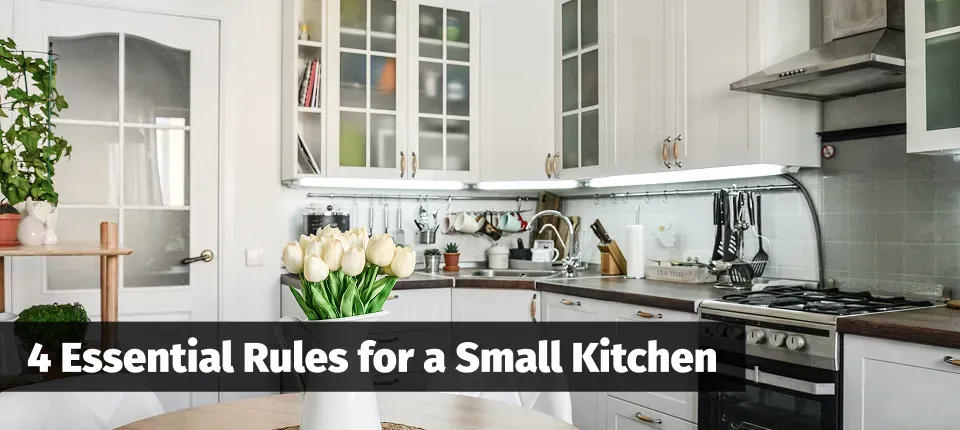
Lighting plays a major role in how large or small your kitchen feels. Poor lighting can make a compact space feel cramped, while layered lighting adds depth and visual openness.
A well-designed small kitchen typically uses three types of lighting:
Ambient Lighting
This is your primary overhead lighting, often recessed lights or flush ceiling fixtures, that illuminates the entire room.
Task Lighting
Task lighting focuses on work areas such as countertops, sinks, and cooktops. Under-cabinet lighting is especially valuable because it brightens the areas that often feel dark in smaller kitchens.
Accent Lighting
Pendant lights or decorative fixtures add style while highlighting specific areas like kitchen islands or peninsulas.
Pro tip: Choose bright, neutral lighting to create a clean, open atmosphere.
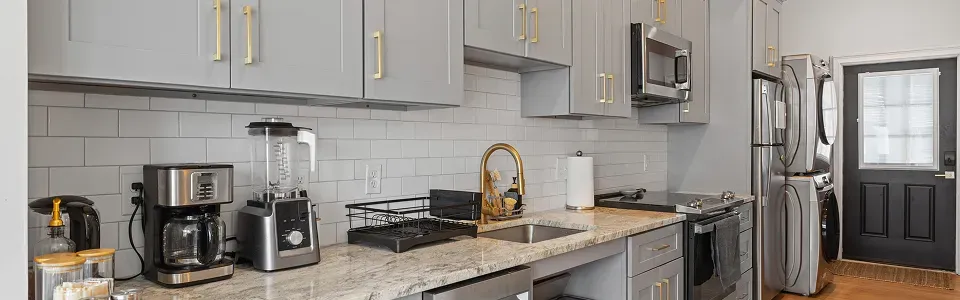
2. Use Creative Storage Solutions
Storage is often the biggest challenge in a small kitchen. Without a smart storage strategy, clutter can quickly take over limited cabinet space.
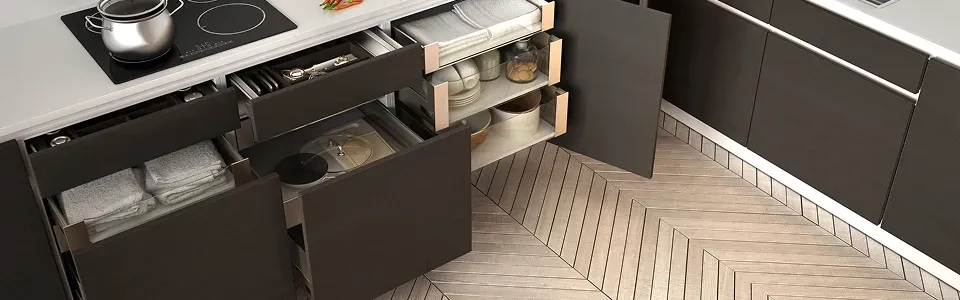
The goal is to maximize vertical and hidden storage.
Consider incorporating:
-
Pull-out pantry cabinets
-
Magnetic knife strips
-
Pegboards for pots and utensils
-
Shelf risers inside cabinets
-
Door-mounted spice racks
-
Tall cabinets that reach the ceiling
Using wall space and vertical storage allows you to store more without expanding the kitchen footprint. Designers often emphasize vertical organization as one of the most effective ways to increase storage capacity in small kitchens.
If you’re planning a remodel, specialized storage like custom cabinetry storage solutions can dramatically improve functionality.
3. Follow the “Less Is More” Rule
Small kitchens benefit from a minimalist mindset. The more items you keep in the space, the more cramped it will feel.
Take a close look at what you actually use regularly.
Ask yourself:
-
Do you really need three sets of dishes?
-
How often do you use specialty appliances?
-
Could multi-purpose tools replace single-use gadgets?
Many professional organizers recommend removing items that aren’t used frequently. A decluttered kitchen not only feels larger but also improves efficiency when cooking or cleaning.
One helpful rule: If an appliance performs only one function and you rarely use it, consider storing it elsewhere or removing it entirely.
4. Keep Countertops Clear and Functional
Counter space is incredibly valuable in a small kitchen. Every inch should contribute to food prep or cooking.
Instead of filling your counters with decorative objects or rarely used appliances, focus on keeping only essentials out.
Common items that make sense to keep on the counter include:
-
Coffee maker
-
Knife block
-
Dish soap and sponge
-
Frequently used cooking oils or utensils
Everything else should be stored in cabinets or pantry spaces whenever possible.
Even a few extra inches of available prep space can significantly improve how comfortable your kitchen feels during daily use.
Cluttered surfaces can also make small kitchens appear more cramped, while clean countertops create the illusion of more space.
Bonus Tip: Choose Appliances Designed for Smaller Kitchens
Appliances can have a big impact on how efficiently a small kitchen functions.
Modern compact appliances are designed to maximize space without sacrificing performance. Popular choices include:
-
Counter-depth refrigerators
These options allow you to maintain full functionality while preserving valuable floor space.
Make the Most of Your Kitchen Space with Bray & Scarff
A small kitchen doesn’t mean sacrificing style or functionality. With the right combination of lighting, storage solutions, smart appliance choices, and clutter control, even compact kitchens can feel efficient and inviting.
If you're planning a kitchen upgrade, Bray & Scarff specialists can help you select appliances and design solutions that work perfectly with your space. Ask about Bray & Scarff’s kitchen remodeling program, where our design and appliance experts can guide you every step of the way from planning to installation. Our virtual kitchen designer can help you see which refrigerator fits best in your ideal small kitchen layout, so you can make the right moves for your home kitchen space.
Visit a Bray & Scarff appliance showroom in Maryland and Virginia or contact our team for personalized guidance based on your kitchen layout, lifestyle, and design goals.
Related readings:
FAQs: 4 Essential Rules for a Small Kitchen
What appliances work best in a small kitchen?
Compact or counter-depth appliances are often ideal. Built-in designs can also create a more streamlined appearance and save valuable floor space.
How do you make a small kitchen look bigger?
Good lighting, minimal clutter, lighter color palettes, and reflective surfaces can help a small kitchen appear larger and brighter.
Should you use open shelving in a small kitchen?
Open shelving can work well in moderation, but too much can create visual clutter. A mix of cabinets and shelves typically works best.
Is a kitchen island possible in a small kitchen?
Sometimes. Narrow islands or rolling carts can add prep space and storage without overwhelming the room.
Related Articles