
7 Tips To An Efficient Refrigerator
Sat May 07 2016
- Refrigerators
Is your refrigerator running? Wait, I know this sounds like the beginning of a bad joke but what I mean to ask is your refrigerator running as efficiently as possible? Follow these tips to go green (and save a little green on the side!).
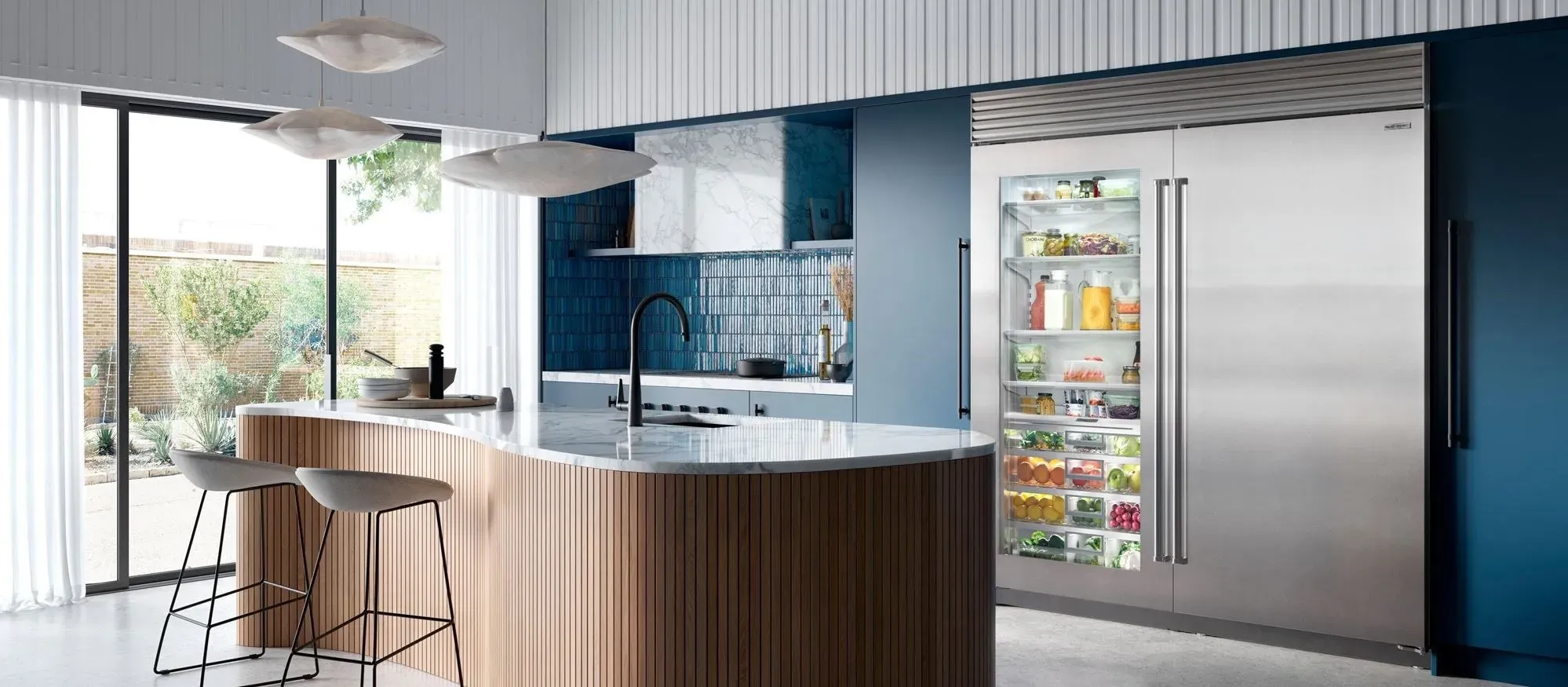
1. Clean Behind Your Refrigerator Do you know what lurks behind your refrigerator? More than likely it's a lot of dust (and maybe a few stray magnets). There's also the condenser coils back there that are really good at collecting dust and dirt. Regularly vacuuming behind your refrigerator will help your coils clean, allowing them to remove heat more efficiently. Also, be sure to leave some space behind your refrigerator for proper ventilation.
2. Check Door Sealer Each door of your refrigerator has a molded rubber seal to keep the cool air inside. Unfortunately over time your door sealers can weaken or break which means precious energy out the door (literally). Make sure your doors are airtight or if your sealers need replacing. You can test to see if your refrigerator doors are airtight by placing a piece of paper half in and half out of the refrigerator. If you can easily pull the paper out, the latch may need adjustment or the seal may need replacing. It is also a good idea to keep your doors closed as much as possible. As fun as it is to stand in front of your fridge pondering life's greatest wonders or trying to figure out who ate your last slice of pie, keep your trips brief.
3. Set the Temperature for Energy Efficiency Just like an air conditioner, turning your refrigerator's temperature up just slightly can have a positive effect on your wallet. And don't worry, you don't have to sacrifice the longevity of your food. To provide the greatest efficiency for your home, set your fridge temp between 36-38°F and your freezer between 0-5°F. If your unit does not have exact degree readings, set your appliance to the midpoint on the dial. Tip: You can check the actual temperature of your fridge by placing an appliance thermometer in a glass of water in the center of the refrigerator and read it after 24 hours.
4. Allow Foods To Cool Let's say you just made a large batch of your favorite soup (have we told you about this Olive Garden imitant of Zuppa Toscana? It's amazing) and you're really tired. Sleep needs to happen soon but it's going to take awhile for that soup to cool down to room temperature. You could just toss it in the fridge but then your fridge has to work twice as hard to cool it down, plus it can accidentally warm up your other foods. Allowing the necessary time for your foods to cool can keep your refrigerator working efficiently.
5. Fill Empty Space We know how quickly a refrigerator can go from being full stocked to starvation mode, especially with the hungry kiddos at home. During those dry times, it's a good idea to fill up empty spaces with bottles full of water. Filling the spaces keeps the fridge cold so it doesn't have to work extra hard to maintain optimal temperatures. There are times when it's not best to keep the fridge full, such as a very cluttered fridge. A lot of clutter means more time with the door open searching for foods. So while a full fridge is a good idea, it's also best to keep clutter down to a minimum.
6. Reduce Frost Inside your refrigerator frost can form over time and cause a large waste of energy and cost to your monthly bills. Frost buildup on the coils forces your appliance to work harder and makes it difficult to maintain proper temperature. It is especially prominent in hot and humid climates. Most new refrigerators are self-defrosting so you don't have to worry about this problem. However, if you have an older refrigerator, you may have to manually defrost it yourself. Any ice that reaches 1/2 inch thick needs to be removed.
7. Cover Everything Be sure to cover all foods before placing them inside the refrigerator. Aside from crackers, most foods have moisture. Leaving these foods uncovered allow for moisture to leach into the air. Your refrigerator then has to work even harder to get rid of the moisture to avoid frost buildup and keeping an optimal climate for food storage.
Related Articles