
Slide-In Range Versus Freestanding Range
Thu Apr 11 2019
- Ranges
When shopping for a range for your new kitchen or remodel project, you will want to choose a range that matches your kitchen and lifestyle. At first glance, these two styles of ranges may seem very similar, which can make choosing between a slide-in range and a freestanding range challenging.
Both of these styles have their advantages and disadvantages, which is why it’s essential to understand the differences between them before making a purchase. We’ll compare slide-in vs. freestanding ranges to help make sure you have all of the information you will need to make an informed decision.
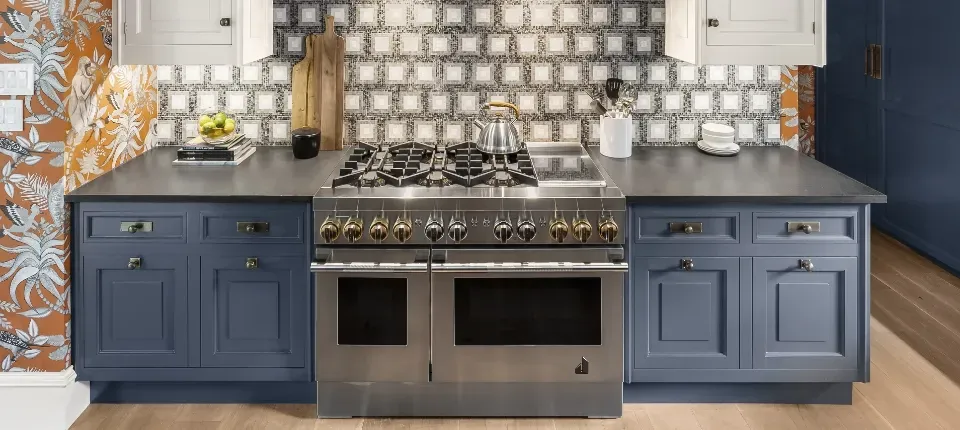
What Is A Slide-In Range?
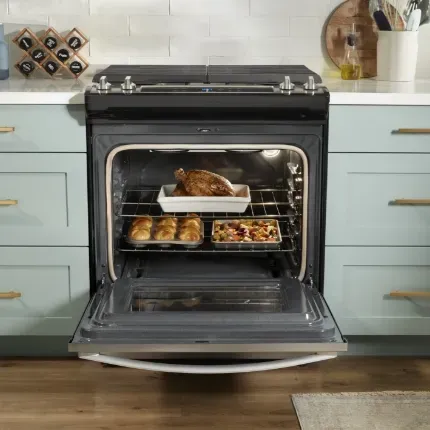
A slide-in range is designed to be installed between cabinets and sits flush with the countertop. The controls are located on the front of the range, which makes for easy access. The sides of the range are unfinished, which means that they are not designed to stand alone and must be installed between two cabinets. The slide-in range usually has a cooktop and an oven that is built into the same unit.
Looking for a seamless, modern look? Browse our full collection of slide-in ranges.
What Is A Free-Standing Range?
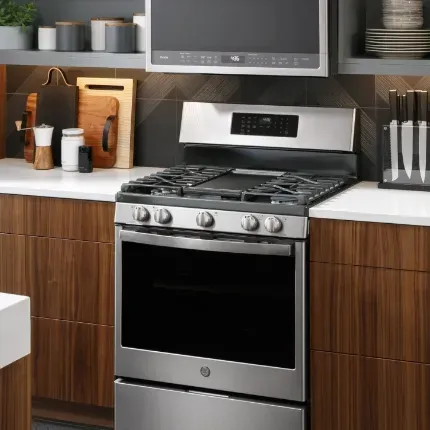
A free-standing range is a self-contained appliance that stands on its own and is not installed between cabinets. The sides and back of the range are fully finished, allowing the appliance to be placed anywhere in the kitchen. The control panel is located at the back of the range and is not easily accessible from the front. Like a slide-in range, these typically have a cooktop and oven that are built into the same unit.
Need versatility and easy installation? Shop Bray & Scarff's free-standing ranges.
Main Differences Between Slide-In and Free-Standing Ranges
Installation
As the name suggests, a slide-in range physically slides into cabinetry, while a freestanding range can stand on its own. However, it means more than simply that. A slide-in range is built specifically to be built into cabinetry, so it does not have finished sides. This means it cannot be placed at the end of your cabinets and may or may not require a pedestal to sit on.
Freestanding ranges, on the other hand, sit on their own and have finished sides, allowing for more flexibility since you can place the oven either in the cabinets or at the end, and it sits completely on its own. Another difference to consider is that freestanding ranges can plug into an outlet while slide-in ranges must be hardwired.
Control Location
Freestanding ranges feature a backguard with oven controls, burner controls, or both, whereas slide-in ranges display controls that are located on the front of the range or the cooktop surface. The freestanding configuration does limit them to being up against a wall and can block a beautiful backsplash.
Additionally, many homeowners don’t like having to reach over a hot surface to control the cooktop. Slide-in ranges offer an unobstructed view of the backsplash and isn’t restricted to being placed against the wall. The front-control or cooktop surface knobs also make it easier to control without reaching over a hot surface.
Cleanability
Since freestanding ranges stand entirely on their own, there is usually a small space between the cooktop surface and the adjacent cabinet, offering a space where food and liquids can fall. Alternatively, the cooktop surface of slide-in ranges slightly overlaps the surrounding cabinetry which offers better cleanability.
The Look
Thanks to the overlapping cooktop surface and knob location, slide-in ranges offer a desirable built-in look that is often associated with luxury in a new or existing kitchen. As mentioned before, it also offers an unobstructed view of the backsplash or the nearby dining room.
Which Range Is Right For You?
Slide-in ranges are popular because they offer a sleek, customized look that integrates seamlessly with your cabinets. Since they are flush with the countertop, they also provide a clean and modern appearance that elevates the look of any kitchen. Additionally, this style typically has more cooking surface area, making it easier to cook multiple dishes at once.
Freestanding ranges, on the other hand, are versatile and can be placed anywhere in the kitchen. They are also typically more budget-friendly than slide-in ranges, making them an excellent option for those looking to save money. The placement of controls on a free-standing range is usually located in the back, which can help prevent accidental changes to the cooking settings.
While choosing the right kitchen range is a personal choice that depends on your preferences and lifestyle, this general breakdown should help you get a better idea of which type of range is right for your kitchen layout and desired outcome.
Does a slide-in range need a countertop behind it?
No, you do not need to install a countertop behind a slide-in range. The small gap between the stove and the wall is normal for this type of appliance; however, you can add a backsplash or countertop if you would like.
Can a slide-in range be freestanding?
No, a slide-in range cannot be a freestanding appliance.
Can you replace a freestanding range with a slide-in range?
These two types of ranges are not easily interchangeable because of their different installation processes and the fact that they are designed to fit differently. A slide-in model cannot be installed directly against the wall; inches of countertop space is commonly added to create less of a gap between the appliance and the wall.
Find The Right Range For Your Kitchen Remodel at Bray & Scarff
Now that you have a better understanding of the difference between freestanding models and slide-in models, you are ready to begin searching for your perfect range! Bray & Scarff offers a wide inventory of the best ranges from top-selling brands like GE Profile, JennAir, Whirlpool, and more for you to browse from. No matter your budget or preference, we have the perfect appliance for you.
Visit one of our appliance store locations in Alexandria and Arlington, Virginia, or Annapolis and Laurel, Maryland. Our store experts will be happy to answer any questions and help you find the right kitchen appliance for your home. Whether you are in need of a new range, refrigerator, oven, cooktop, dishwasher, or any other kitchen appliance, Bray & Scarff is here to help.
If you need help with your kitchen remodel, head on over to our article “How To Start Your Remodel,” where we share the best tips for getting started with a kitchen remodeling project. We also offer professional kitchen remodeling services to help make building the kitchen of your dreams a breeze.
Frequently Asked Questions: Slide-In Vs. Freestanding Range
Does a slide-in range need a countertop behind it?
No, you do not need to install a countertop behind a slide-in range. The small gap between the stove and the wall is normal for this type of appliance; however, you can add a backsplash or countertop if you would like.
Can a slide-in range be freestanding?
No, a slide-in range cannot be used as a standalone appliance. Because they are built to be integrated, the sides are unfinished, exposing raw metal or insulation that isn't meant to be seen. Furthermore, they lack a backguard, which leaves your wall unprotected from heat and grease while creating an unsightly gap between the stove and the drywall. For any exposed-side installation, a freestanding model is required.
Can you replace a freestanding range with a slide-in range?
These two types of ranges are not easily interchangeable because they are designed to fit differently within your cabinetry. A slide-in model typically requires a 2-inch filler strip or a countertop extension behind the unit to close the gap between the appliance and the wall. Additionally, because slide-in ranges often have unfinished sides, they must be installed between cabinets rather than at the end of a counter run.
Do slide-in ranges come with finished sides?
Typically, no. Slide-in ranges are engineered with unfinished sides because they are intended to be slid in between two base cabinets. If your kitchen layout requires a range at the end of a cabinet run with one side exposed, a freestanding range is the better choice, as its sides are fully finished to match the appliance.
Which range style is easier to keep clean?
Slide-in ranges generally offer better cleanability because the cooktop surface slightly overlaps the adjacent countertops. This overhanging lip prevents crumbs and liquid spills from falling down the sides of the stove into the gaps between the appliance and the cabinets. Freestanding ranges sit flush against cabinets, which often leaves a small crevice where debris can collect over time.
Will a slide-in range block my backsplash?
One of the primary benefits of a slide-in range is the front-control design, which eliminates the tall backguard found on freestanding models. This makes slide-in units the ideal choice for homeowners who have invested in a custom tile or stone backsplash and want a seamless, unobstructed view of their kitchen’s design.
Related Articles