
Brand Guide to Stainless Steel Appliances
Wed Mar 11 2026
- Appliances
Stainless steel remains one of the most popular finishes in kitchens today, but not all stainless steel is created equal.
If you’ve ever noticed slight differences in tone, texture, magnetism, or durability between brands, you’re not imagining it. Appliance manufacturers use different stainless steel grades and finishing techniques depending on price point, design intent, and performance goals.
Understanding these differences helps you choose appliances that match your lifestyle, kitchen environment, and long-term expectations.
In this guide, we’ll break down the most common types of stainless steel used in appliances, how they compare, and which brands commonly use each type.
Why Stainless Steel Type Matters
When shopping for appliances, stainless steel affects:
-
Durability and resistance to rust
-
Scratch visibility
-
Fingerprint resistance
-
Color tone consistency
-
Magnetic compatibility
-
Long-term appearance
For homeowners investing in a full kitchen package, knowing these differences prevents mismatched finishes and helps ensure your appliances age gracefully.
The Main Stainless Steel Types Used in Appliances
304 Stainless Steel (18/8 or 18/10)
Most premium, kitchen-grade stainless steel.
Commonly used in:
-
Luxury built-in appliances
Why It Matters
-
Highly corrosion-resistant
-
Non-magnetic
-
Contains higher nickel content
-
Richer, deeper color tone
-
Extremely durable in humid environments
Because of its higher nickel content, 304 stainless steel resists rust far better than lower grades. It’s commonly found in professional kitchens and commercial cookware.
What This Means for You
If you want maximum durability, resistance to staining, and long-term performance, especially in humid climates or busy kitchens, 304 stainless steel is the gold standard.
430 Stainless Steel (18/0)
Common in mid-range appliances.
Used in:
-
Range control panels
-
Budget-friendly appliance packages
-
Select mid-tier brands
Why It Matters
-
Magnetic
-
Lower nickel content
-
Slightly lower corrosion resistance
-
More affordable
Because 430 stainless contains little to no nickel, it’s magnetic, meaning magnets will stick to the surface. It still performs well for indoor kitchen environments but may show wear slightly faster than 304.
What This Means for You
430 stainless is durable and cost-effective but may show fingerprints or surface wear more easily compared to premium 304.
Black Stainless Steel (Brand-Dependent Coating)
A coated finish over stainless, not a different alloy.
Commonly used in:
Why It Matters
Black stainless steel is typically created by applying a polymer or oxide coating over standard stainless steel (often 304 or 430 underneath).
Key characteristics:
-
Dark, modern aesthetic
-
Often fingerprint-resistant
-
Tone varies significantly by manufacturer
-
Coating can scratch and reveal silver stainless underneath
What This Means for You
Black stainless offers a bold, modern look, but because it’s a coating, deep scratches can expose the metal beneath. Color matching across brands can also vary.
Fingerprint-Resistant Stainless Steel
A surface treatment, not a different alloy.
Used in:
-
GE
-
Café
-
Many family-focused brands
Why It Matters
Fingerprint-resistant stainless features a protective coating that minimizes visible smudges and handprints.
Benefits:
-
Easier to clean
-
Softer or warmer tone
-
Less daily wiping
-
Ideal for high-traffic kitchens
What This Means for You
For families with children, or anyone tired of constant polishing, fingerprint-resistant stainless is one of the most practical options available.
Brushed or Satin Stainless Steel
Created through surface finishing techniques.
Used in:
-
Premium brands
-
Professional-style ranges
-
Luxury built-in appliances
Why It Matters
Brushed stainless features a visible grain that runs in one direction.
Advantages:
-
Hides fine scratches
-
Conceals small blemishes
-
Creates a professional, chef-inspired look
-
Feels more substantial
Many high-end brands use brushed 304 stainless to achieve both durability and a commercial aesthetic.
What This Means for You
If you love the “restaurant kitchen” look, brushed stainless delivers durability with a bold, professional feel.
Polished Stainless Steel
Mirror-like finish.
Used in:
-
Decorative trim
-
Luxury accent pieces
-
Specialty appliances
Why It Matters
Polished stainless offers a sleek, reflective surface that stands out visually.
However:
-
Shows fingerprints easily
-
More prone to fine surface scratches
-
Requires more maintenance
What This Means for You
Polished stainless creates a glam, high-end look, but expect more upkeep compared to brushed or fingerprint-resistant finishes.
Specialty Stainless Finishes by Brand
Many premium manufacturers create proprietary finishes layered over high-grade stainless steel.
GE Café: Matte White & Matte Black Stainless
-
Soft matte texture
-
Highly fingerprint-resistant
-
Contemporary design appeal
Sub-Zero/Wolf: Classic Stainless
-
High-grade 304 stainless
-
Deep directional grain
-
Extremely durable and commercial-inspired
Thermador: Professional Stainless
-
Premium brushed 304
-
Cool-toned finish
-
Designed for integrated luxury kitchens
JennAir: Rise & Noir Stainless
-
Soft brushed textures
-
Accent metal detailing
-
Elevated, design-forward aesthetic
Each brand fine-tunes tone and texture, which is why mixing brands sometimes results in subtle finish differences.
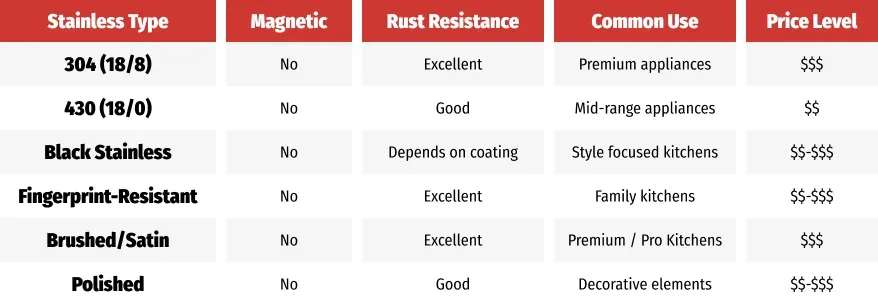
Quick Stainless Steel Comparison Chart
How to Choose the Right Stainless Steel for Your Kitchen
When selecting appliances, consider:
-
Do you want magnets to stick?
-
Is durability in a humid environment important?
-
Do you prefer low maintenance?
-
Are you mixing brands?
-
Is your kitchen modern, transitional, or professional-style?
For long-term performance and premium feel, 304 stainless is often the best investment. For busy households, fingerprint-resistant finishes provide everyday convenience. For bold style, black stainless steel delivers a strong visual impact.
Why Shopping Stainless Steel Appliances in Person Matters
Because stainless steel tones vary slightly between manufacturers, seeing appliances side-by-side helps ensure color consistency, especially when purchasing a full kitchen suite.
Bray & Scarff specialists can help you compare finishes in person and guide you toward options that align with your design vision and performance expectations.
Visit a Bray & Scarff appliance showroom in Maryland and Virginia or contact our team for personalized stainless steel appliance insights for your kitchen layout, lifestyle, and design goals.
Looking to incorporate stainless steel appliances into your kitchen remodel or appliance upgrades? Ask about Bray & Scarff’s kitchen remodeling program, where our design and appliance experts can guide you every step of the way from planning to installation and help you create the kitchen of your dreams. Tools like the virtual kitchen designer can help you see which refrigerator fits best in your ideal kitchen design, so you can make smarter and more comfortable purchasing decisions.
Related readings:
FAQs: Brand Guide to Stainless Steel Appliances
Is 304 stainless steel better than 430?
Yes. 304 offers superior corrosion resistance and durability, making it ideal for premium appliances.
Why don’t magnets stick to some refrigerators?
High-grade 304 stainless steel is non-magnetic due to its nickel content.
Does black stainless steel scratch easily?
It can. Because it’s a coating over stainless, deep scratches may reveal the silver metal underneath.
Is fingerprint-resistant stainless steel worth it?
For busy households, absolutely. It significantly reduces visible smudging and cleaning time.
Will different brands match in stainless color?
Not always. Even within stainless categories, tones and grain direction can vary by manufacturer.
Related Articles