
How to Clean Stainless Steel Appliances
Thu Nov 20 2025
- Appliances
Stainless steel appliances are timeless, sleek, and effortlessly modern, but anyone who owns them knows that keeping them clean can be tricky. Between fingerprints, smudges, and water spots, stainless steel requires special care to stay shining.
Whether you’re cleaning your refrigerator, range, or dishwasher, this guide from Bray & Scarff will show you exactly how to clean stainless steel appliances the right way, without damaging their finish.

Why Stainless Steel Needs Special Care
Stainless steel is beloved for its elegant look and long-lasting durability. It resists rust, corrosion, and heat, making it ideal for busy kitchens. However, it’s not completely maintenance-free. The smooth metal surface tends to show streaks and fingerprints easily, especially on appliances like refrigerators and dishwashers that see daily use.
Cleaning stainless steel properly requires the right technique, harsh cleaners or abrasive tools can leave scratches or strip away the protective coating. The good news? With a few simple steps and gentle cleaners, you can keep your appliances looking brand-new.
Know the Finish: Brushed vs. Polished Stainless Steel
Before cleaning, take a close look at your appliance’s surface. Most stainless steel appliances feature a brushed or satin finish, meaning you’ll see faint lines running in one direction. This is called the grain.
When cleaning stainless steel:
-
Always wipe with the grain to prevent scratching.
-
Avoid circular motions or cross-grain scrubbing.
-
Test any new cleaner in a small, hidden area first.
Following the grain keeps the surface smooth and helps maintain that signature sleek look.
Everyday Cleaning: Fingerprints and Light Smudges
For daily upkeep, you don’t need heavy-duty cleaners. A simple wipe-down goes a long way.
Here’s what you’ll need:
-
Microfiber cloth or soft cotton towel
-
Warm water
-
Mild dish soap (optional)
Steps:
-
Dampen your cloth with warm water (add a drop of dish soap if needed).
-
Wipe in the direction of the grain to remove fingerprints and residue.
-
Rinse and wring out the cloth, then wipe again to remove any soap.
-
Use a dry microfiber towel to buff and shine the surface.
Pro Tip: Keep a microfiber cloth near your appliances for quick daily touch-ups, especially handy before guests arrive.
Deep Cleaning: Grease, Stains, and Streaks
Over time, your appliances can accumulate grease or stubborn smudges that water alone can’t remove. When this happens, it’s time for a deeper clean.
Supplies:
-
White vinegar (in a spray bottle)
-
Baking soda (optional for tough spots)
-
Olive oil or mineral oil (for polishing)
-
Soft microfiber cloths
Steps:
-
Spray white vinegar directly onto the surface.
-
Wipe with the grain using a clean cloth. Vinegar naturally dissolves grease and cuts through streaks.
-
For tough spots, make a paste of baking soda and water and apply gently with a soft cloth. Rinse afterward.
-
Once clean, add shine by applying a few drops of olive oil or mineral oil to a dry cloth and polishing with the grain.
This method restores the natural luster of stainless steel without harsh chemicals.
What Not to Use on Stainless Steel Appliances
To keep your appliances in perfect shape, avoid cleaners and tools that can scratch or corrode the surface.
Never use:
-
Abrasive sponges or steel wool
-
Bleach or ammonia-based cleaners
-
Glass cleaner (it often contains ammonia)
-
Scouring powders or oven cleaners
These products can dull the shine and cause permanent damage. When in doubt, choose mild, non-abrasive cleaning agents.
How to Remove Water Spots and Hard Water Stains
If you live in an area with hard water, you may notice cloudy marks or water spots on your appliances, especially near the sink or dishwasher.
To remove water spots:
-
Mix equal parts vinegar and distilled water in a spray bottle.
-
Spray the affected area and let it sit for 1-2 minutes.
-
Wipe with a microfiber cloth following the grain.
-
Buff dry immediately to prevent new spots from forming.
If the stains are stubborn, you can apply a drop of mineral oil afterward to seal the surface and repel future water marks.
Cleaning Stainless Steel Inside the Kitchen
Stainless steel appliances appear all over the kitchen, and each type has slightly different cleaning needs.
Refrigerators
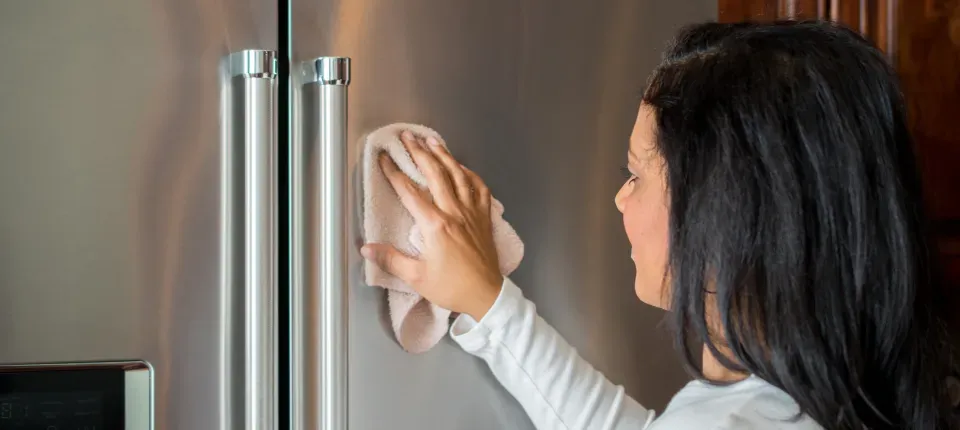
Stainless steel refrigerators are fingerprint magnets, especially around handles and doors. Clean these areas daily with a damp microfiber cloth, then dry completely to prevent streaks.
Dishwashers
Stainless steel dishwasher doors and handles collect grease and residue from daily use. Wipe them down weekly, and don’t forget to clean the edges and control panel. For the interior, run a cleaning cycle with vinegar once a month to eliminate buildup.
Ranges and Cooktops
Stainless steel ranges and cooktops often encounter splatters and grease. Use a soft cloth and vinegar for light cleaning, or a paste of baking soda and water for tougher messes. Always clean while the surface is cool.
Small Appliances
Your small appliances, like toasters, mixers, and coffee makers, deserve the same care. Unplug them first, then wipe gently with a damp cloth. Avoid moisture near electrical parts.
How to Keep Stainless Steel Shining Longer
Once your stainless steel is spotless, the next goal is keeping it that way. Here’s how to maintain that brilliant shine longer between deep cleans:
-
Polish monthly: Apply a light coat of stainless steel polish or oil and buff it in.
-
Use filtered water: If you have hard water, a filter can reduce mineral deposits that cause spotting.
-
Handle with care: Wipe handles and frequently touched surfaces daily to prevent buildup.
-
Avoid magnetic clutter: Magnets can scratch or dull stainless steel over time, consider a magnetic board nearby instead.
Consistent light maintenance will keep your kitchen looking fresh and professional year-round.
Eco-Friendly Cleaning Alternatives
For households looking to stay green, natural cleaners work beautifully on stainless steel. Simple ingredients like vinegar, baking soda, and olive oil not only clean effectively but are also environmentally friendly.
This approach also keeps your kitchen air free from chemical fumes, a smart choice if you have kids or pets.
Are Stainless Steel Appliances Right For You?
Stainless steel appliances are the hallmark of a modern kitchen, elegant, durable, and easy to maintain with the right approach. By using gentle cleaners, wiping with the grain, and avoiding harsh chemicals, you can preserve that stunning finish for years to come.
For more kitchen inspiration and appliance care advice, turn to Bray & Scarff, your local source for premium appliances, professional expertise, and trusted service.

Keep Your Kitchen Beautiful with Bray & Scarff
Your stainless steel appliances are an investment in both style and function, and with the right care, they’ll keep their shine for years to come. Whether you’re maintaining your current appliances or upgrading to new ones, Bray & Scarff has everything you need to create a kitchen that looks as good as it performs.
Looking to incorporate stainless steel appliances into your kitchen remodel? Bray & Scarff’s kitchen remodeling program is designed to guide you every step of the way to bring the kitchen of your dreams to life. Explore our virtual kitchen designer tool and see how stainless steel appliances can elevate your kitchen space.
Visit one of our showrooms proudly servicing locations across the Maryland and Virginia area to discover stainless steel models that combine modern design with lasting performance, and let our experts help you keep them gleaming.
Related readings from our blog:
FAQs: How to Clean Stainless Steel Appliances
Can I use Windex or glass cleaner on stainless steel?
It’s best to avoid ammonia-based glass cleaners. They can leave streaks or discoloration. Instead, use vinegar and water or a dedicated stainless steel cleaner.
How often should I clean stainless steel appliances?
Wipe high-touch areas daily and do a deeper clean weekly. Polishing once a month will help maintain their shine.
What’s the best way to remove fingerprints from stainless steel?
Use a microfiber cloth dampened with warm water or a small amount of vinegar, then buff dry along the grain.
Will baking soda scratch stainless steel?
No, baking soda is gentle and safe when used with a soft cloth. Avoid scrubbing pads or brushes.
How do I prevent streaks after cleaning?
Always wipe with the grain using a dry microfiber towel after cleaning. This prevents water marks and enhances shine.
Related Articles